The 2nd Green Methanol Energy Industry Development Conference Opens
Source: Economic Daily
On January 7, 2026, the 2nd Green Methanol Energy Industry Development Conference, themed “Liquid Sunshine · Alcohol‑Hydrogen Electrification”, was held in Wenzhou. The conference focused on development pathways for liquid new energy such as green methanol and alcohol‑hydrogen electrification, and conducted in‑depth discussions on key topics including greening transportation and logistics, integration of transport and energy, applications in commercial vehicles and ships, infrastructure construction, and industrial collaboration.
Zhang Yongwei, Chairman of the China EV100 Association, delivered a keynote sharing titled “Accelerating the Path of Vehicle–Energy Integration”. He proposed that incorporating new energy vehicles—regarded as “mobile energy storage”—into the power system could not only open up important new space for absorbing renewable energy, but also provide effective tools for grid peak shaving and frequency regulation. From the perspective of vehicle–energy integration, he argued, this approach is both an important pathway to solving renewable energy absorption challenges and a vital pillar for building a new‑type power system and new‑type energy system.
He emphasized that the essence of vehicle–energy integration lies in organically coupling diversified new energy vehicle technology routes with diversified low‑carbon energy sources: matching each type of vehicle with the most suitable energy supply mode, while also finding the most appropriate application scenarios for each type of energy. In the past, the automotive and energy sectors developed independently and were compared in isolation, making systematic coordination difficult. Under the vehicle–energy integration framework, however, the two become mutually enabling scenarios and integrated systems, helping us understand the rationale for diversified development from a holistic systems viewpoint.
Zhu Liyang, President of the China Association of Circular Economy, shared his insights on green methanol energy from the perspective of circular economy. He proposed producing methanol from urban organic waste, low‑quality coal, coke oven gas, coalbed methane, industrial by‑product hydrogen, and CO₂ emitted by power generation, steel, cement and other industries. This, in essence, represents highly efficient utilization of waste materials, which not only improves resource efficiency and reduces environmental pollution, but also creates economic value, and should therefore be regarded as clean or green methanol. Based on this understanding, green methanol has at least three main technological routes: biomass‑to‑methanol, electro‑methanol, and waste‑integrated utilization to methanol.
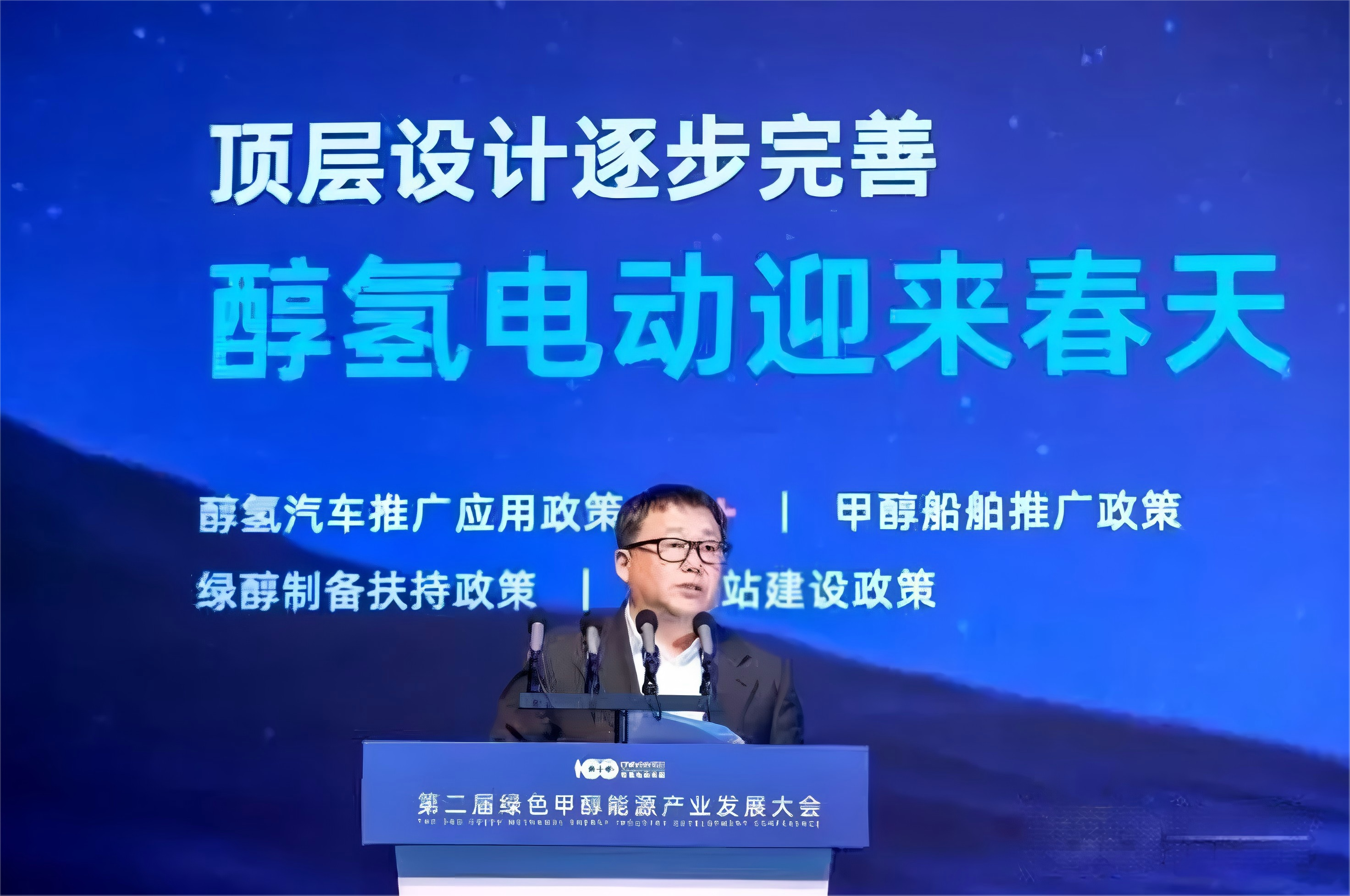
Fang Haifeng, Chief Expert at China Automotive Technology and Research Center and Deputy Director of the China Automotive Strategy and Policy Research Center, believes that the green and low‑carbon transformation of energy will profoundly influence technology route choices in the automotive industry, while decarbonization of the auto sector also depends on the low‑carbon and clean development of energy. Methanol can serve as one of the pathways for the low‑carbon transition of automobiles, especially showing considerable application potential in the commercial vehicle segment. He recommends introducing corresponding policies to guide industries such as coal chemicals to produce lower‑carbon methanol through coupling green hydrogen and green electricity, and to accelerate fuel substitution with green fuels in key application areas such as heavy‑duty trucks and shipping, thereby further expanding pathways for the uptake of green hydrogen, ammonia and methanol.
Liu Ke, Foreign Academician of the Australian Academy of Engineering and Dean of the Institute for Innovation and Entrepreneurship at Southern University of Science and Technology, stated that the organic combination of smart grids and low‑carbon liquid fuel networks can gradually transform the current coal/oil economy into a green power and methanol economy led by renewable energy. He stressed that the hybrid model of “fuel‑oil, methanol and electricity” is an automotive energy solution suited to China.
Shao Yu, Distinguished Senior Fellow at the National Institution for Finance and Development and Special Professor for Fudan University EMBA, argued that energy transition is a gradual process, and multiple technology routes will coexist for a long time before an ultimate energy solution emerges. Among current options, methanol, with its cost‑effectiveness and economic applicability, is an important feasible pathway; the focus now should be on rapidly building its ecosystem.
Wang Weiliang, President of the Board of Bosch Mobility Solutions Group China, noted that driven by diverse application scenarios, there is no single “optimal” powertrain route for commercial vehicles, only the most suitable solution. For example, in urban distribution and short‑haul routes where paths are relatively fixed, charging infrastructure is improving, and electricity prices offer clear advantages, pure electric solutions are highly competitive. In regions with underdeveloped transport infrastructure, limited grid coverage, and dominance of long‑distance trunk line transport, diesel and natural gas will persist for a long time, while methanol is poised to become an important solution combining economic and low‑carbon benefits.
“What should China’s new energy technology route look like?” Fan Xianjun, CEO of Farizon New Energy Commercial Vehicles Group, said that alcohol‑hydrogen electrification, as a liquid new energy, has more prominent advantages than traditional new energies such as pure electric and hydrogen fuel, making it more suitable as a sustainable carbon‑neutral solution for achieving energy self‑sufficiency.
This was followed by a roundtable dialogue moderated by Shi Jianhua, Vice Chairman of China EV100 and Dean of the China EV100 Think Tank Research Institute. Focusing on development policies, international trends, industrial practices, demonstration applications and energy supply systems related to methanol energy and alcohol‑hydrogen electrification, five guests who have been deeply involved in liquid new energy development exchanged views.
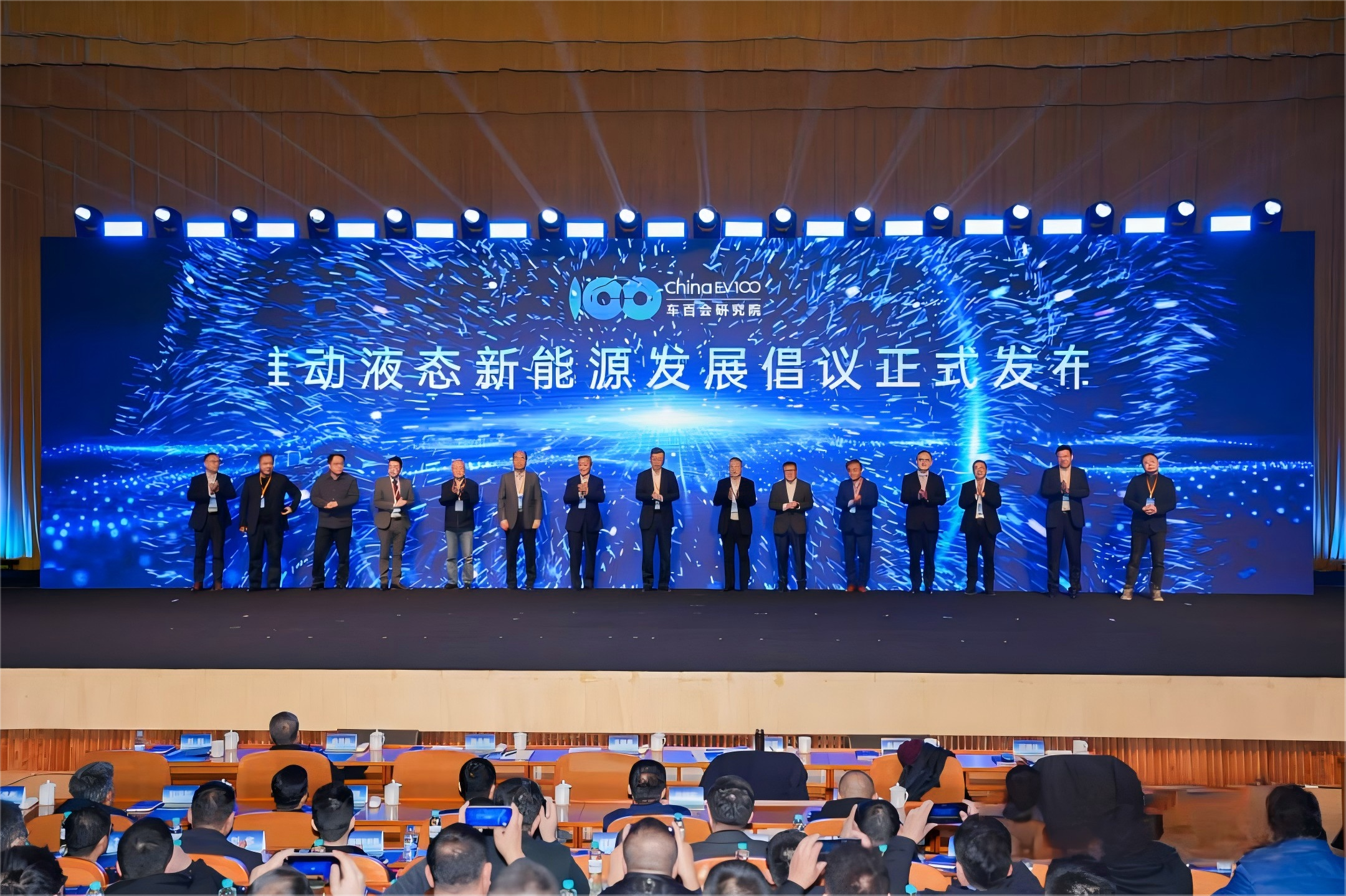
The conference also featured the launch ceremony of the Initiative for Promoting Liquid New Energy Development. Industry organizations, experts, scholars and representatives from the industrial chain jointly issued the initiative, calling for stronger policy coordination, technological innovation and industrial cooperation to accelerate the large‑scale application of green methanol and alcohol‑hydrogen electrification in transport and logistics, and to foster an open, collaborative and mutually beneficial ecosystem for the liquid new energy industry.